
Inside an Architect’s Self-Sustaining California Ranch
Off-grid living is no longer just a remote dream or an experimental lifestyle; it represents the cutting edge of modern, self-sustaining engineering. While traditional cabins historically rely on wood stoves or propane, today’s high-end builds are achieving complete energy independence without sacrificing premium comfort.
A premier example of this modern approach is currently unfolding on the Central Coast of California in Santa Margarita, just south of Paso Robles. A Californian architect designed—and is currently building—his own custom ranch to push the boundaries of sustainable design. By pairing a robust solar array and battery storage with an advanced air-to-water heat pump, this project proves that off-grid radiant heating is the ultimate solution for an efficient, whole-home comfort system.
Here is a look at how these technologies blend together to create a luxury, self-sustaining home, featuring a recent video update straight from the job site:
The Foundation: Solar + Battery Storage
The starting point for any high-functioning off-grid home is a robust energy generation and storage setup. On this Santa Margarita ranch, the solar arrays and backup batteries are already fully operational.
By capturing daylight and storing it in a dedicated battery bank, the property eliminates reliance on the traditional electrical grid. This setup acts as the “beating heart” of the home, supplying the clean electricity required to run modern appliances, lighting, and critically, the HVAC system.
The Muscle: Heat Pump Technology
Historically, heating an off-grid home meant relying heavily on wood stoves or propane delivery. Instead of generating heat through combustion, heat pumps use electricity to move existing heat from the outside air indoors (even in chilly weather). Because they move heat rather than creating it, they can operate at efficiencies well over 300%. Powered entirely by the site’s solar and battery system, the air-to-water heat pump provides a completely renewable source of thermal energy. Also for this build, the SpacePak Solstice heat pump comes as part of the Warmboard Comfort System, integrated to the hydronic heating system for better efficiency.
The Comfort: Radiant Hydronic Heating
To distribute that heat efficiently and comfortably, the project utilizes the Warmboard Comfort System, with an air-to-water heat pump and our Warmboard-R radiant panels. Radiant heating works by circulating warm water through durable PEX tubing embedded in the floor panels.
As seen in the video, Jeremiah from Warmboard highlights the process of getting the high-conductivity radiant panels installed directly over the concrete slab and prepping the orange PEX tubing coils for layout.
Why radiant floor heating shines in an off-grid environment:
- Precision Zoned Efficiency: In an off-grid setup, every watt counts. Hydronic radiant heating allows you to heat only the specific zones you are using rather than conditioning the entire house. By eliminating the massive energy waste of empty-room heating, you significantly reduce the daily draw on your battery bank.
- Lower Operating Water Temperatures: Warmboard’s high-conductivity aluminum surface transfers heat far more efficiently than standard radiant options or traditional forced air. Because it delivers maximum comfort using much lower water temperatures, your heat pump doesn’t have to work as hard—maximizing the performance and lifespan of your solar-powered system.
- Smaller Mechanical Requirements: High-efficiency radiant panels allow you to downsize your overall mechanical footprint. Because the system maximizes every BTU of heat transfer, you can often specify a smaller heat pump and a smaller solar/battery array. Reducing the size of your required mechanical equipment dramatically lowers your upfront infrastructure costs.
- Reduced Environmental Infiltration: Off-grid homes are frequently located in remote, rural, or exposed environments prone to high wind, dust, and dirt. Traditional forced-air systems rely on high-velocity blowers that constantly circulate outdoor dust and create negative pressure zones that draw dirty outside air into the home. Radiant heating relies on quiet, pure thermal radiation, keeping the indoor air settled and stable.
Optimizing the Construction Environment
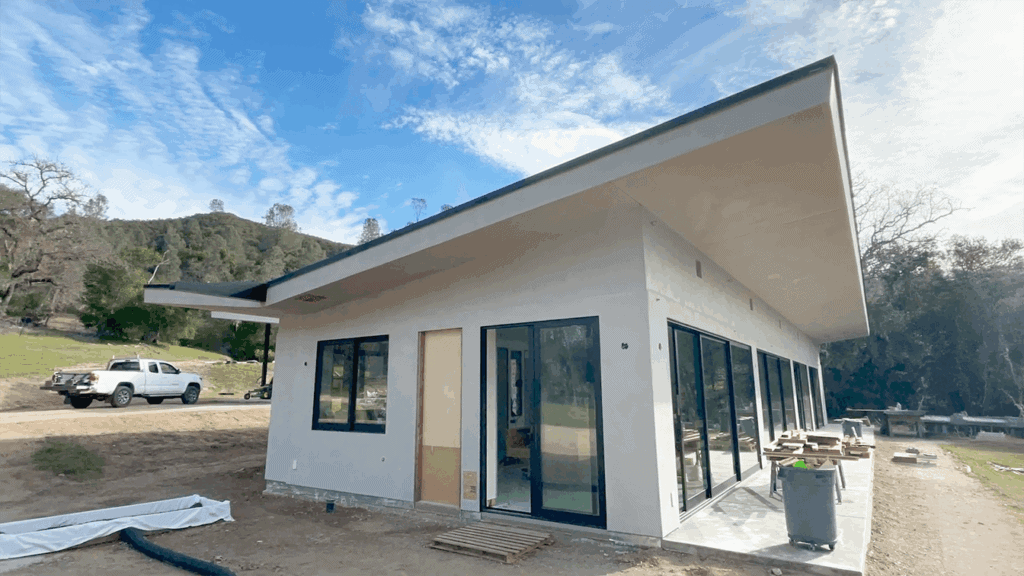 One of the most practical benefits of getting the off-grid mechanical systems fired up early is how it aids the rest of the construction process. With the solar, batteries, heat pump, and radiant system running, the builders can actively heat the home while installing drywall and finishing the interior. This helps dry out building materials evenly and creates a comfortable working environment as the home is officially “dried in”.
Summary
When an architect builds their own home, the scrutiny applied to every material and mechanical system is magnified. They aren’t just designing for a client; they are selecting the infrastructure they will live with every day, demanding the perfect intersection of architectural flexibility, long-term durability, and energy efficiency. There is perhaps no greater feather in our cap than when industry experts trust their personal dream homes to Warmboard.
By upgrading a standard off-grid cabin concept into a grander ecosystem of solar power, battery storage, high-efficiency heat pumps, and Warmboard radiant panels, projects like this California ranch prove what is possible in modern residential design. The result is a resilient, self-sustaining home that sacrifices zero modern luxuries, maintains a minimal footprint on the landscape, and stands as a testament to the future of independent living.
Related blog posts: