Warmboard Blog
This blog discusses all aspects of radiant heating and what makes it more comfortable, energy efficient and healthier than forced air heating. It also talks about radiant heat misconceptions as there have been great advances made in recent history.
Friday, August 22, 2008
How to build a home that if it were a car, would get over 100 mpg - PART I
Energy efficiency is, and has always been, one of the key reasons for building a radiant floor heated home. Given the rapidly escalating cost of energy, the efficiency of radiant heat has never been more important.
What about radiant heat makes it so energy efficient?
• Parasitic losses. Parasitic loss refers to energy lost due to inherent inefficiencies of a system. For example, duct work is relatively large in diameter, difficult to permanently seal and insulate, and is often located in unheated crawl spaces or basements. As hot air is blown down these ducts, heat is lost through the walls of the ducts and potentially wherever there may be leaks at joints. When hot air is blown into a room with a door closed, there may not be a good return path for that hot air which causes a slight increase in the pressure in that room. This can often cause the pressure to be released by leaking outside around the weather stripping on windows. The blowers used in forced air systems typically require 9x as much electricity as the pumps in radiant system. All of these parasitic losses add up in forced air systems, decreasing their efficiency by up to 30% compared to radiant floor heating.
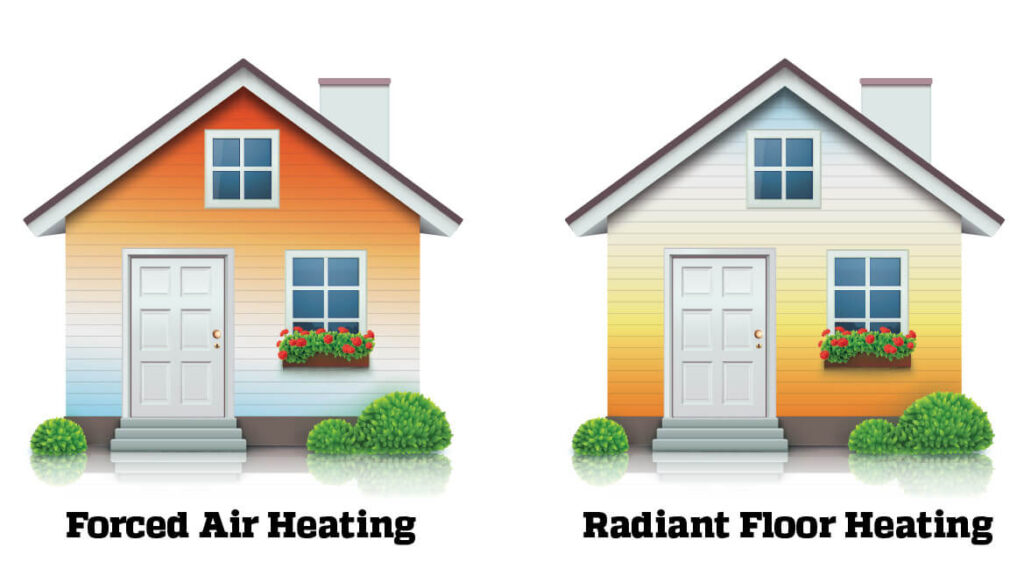
• Lower ceiling temperatures. When air comes out of a forced air heating system duct, it is typically between 120 and 140 degrees. This hot air rapidly rises causing a heated air layer near the ceiling. This can often be 10 or more degrees warmer than the air temperature at the floor. This stratification effect becomes greater as the ceiling height becomes greater. When ceilings are hot and they are just below a cold roof, heat loss can be quite high. It is precisely because of this effect that we insulate ceilings and attics so much. Radiant heat floors stratify much less, first, because 50% or more of their heat transfer is from infra red which is a form of invisible light. Like all lighting, its effect is greater the closer you get to the source. In other words, it concentrates much of its output near the floor, where you and your children live instead of near the ceiling where only the spiders live. Second, because the temperature of a radiant floor is quite mild (typically 75-80 degrees), to the extent that it does warm the air that comes into contact with it, it only warms it to the mid seventies which means that it does not stratify to nearly the extent of 120-140 degree air. It is not unusual for the ceilings in a radiant heated home to be 10-20 degrees cooler than a forced air home.
• Zoning reduces energy usage. Most forced air heated homes have a single thermostat, in other words, they are single zone systems. This is because forced air systems are inherently difficult and therefore, expensive to zone. Most radiant heat homes have numerous zones because it is relatively easy and inexpensive to add zones to a home. It makes sense to heat bedrooms perhaps to 65 degrees while maintaining 70 degrees in a family room or even turning off the heat in a guest bedroom until it is needed. Directing the right amount of heat to the right rooms based on their usage can be a big energy saver.
• Lower air temperatures for the same comfort. If we are outside on a spring day when the sun is shining, we may be comfortable in shirtsleeves when the air is only 60 degrees because the radiant warmth of the sun allows us to be comfortable at a lower air temperature. The same is true in a radiant heat home. With the warmth of the infra red shining on us from the floor, studies have shown that the same comfort is achieved in a radiant home when the thermostat is set a couple of degrees lower as compared to a forced air home at the higher setting.
• Blowing hot air paradoxically can cool us. When we are outside on a mild spring day we may be comfortable until the wind picks up. Even though the air temperature has not changed, the mere fact that there is air movement across our skins causes evaporative cooling. Paradoxically, the blowing hot air from a duct can cause you to set the thermostat to a slightly higher temperature to maintain the same comfort achieved in a radiant heated home at a lower set point.
• KSU study. It is difficult to precisely quantify the savings from these last three effects because actual savings can vary quite a bit depending on the design of a particular home, the climate zone it is located in, the fuel used to heat the home and many other factors. Nonetheless, a thoughtful study of all of these effects was done at Kansas State University in conjunction with the American Society of Heating Refrigeration and Air-conditioning Engineers (ASHRAE) that established that a more or less typical radiant heated home in the US can expect 25% savings over a conventional forced air home.
Warmboard drives these energy savings numbers higher for several reasons:
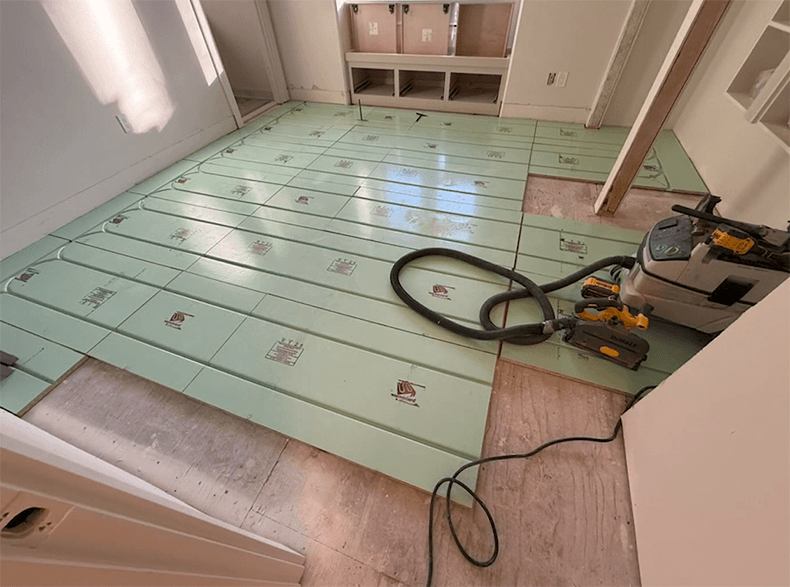
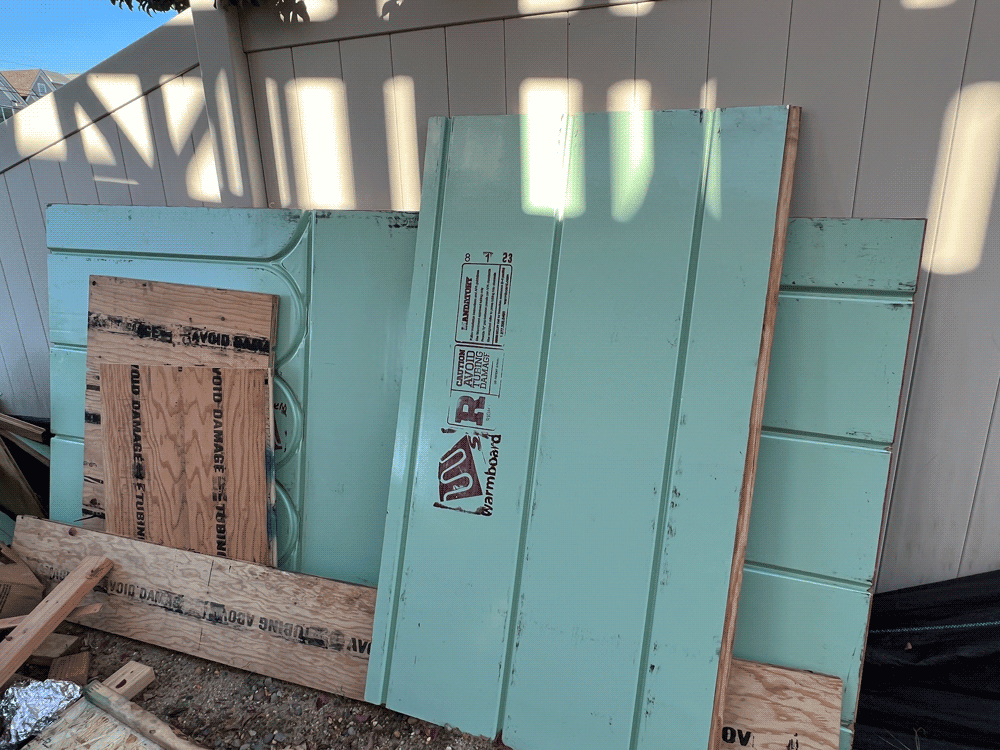
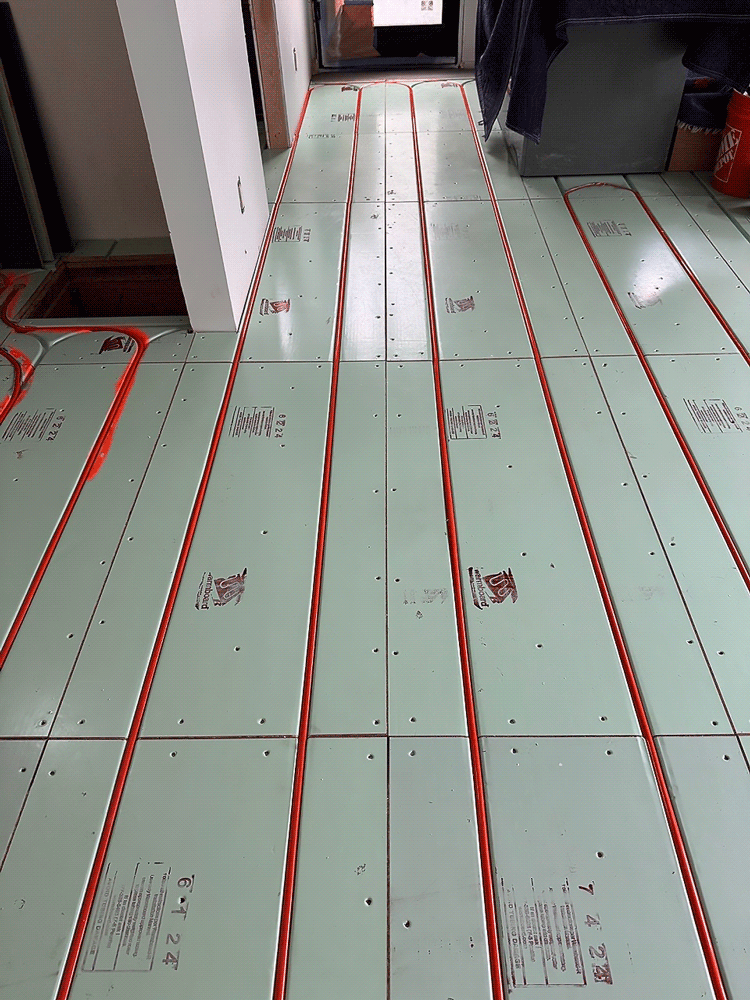
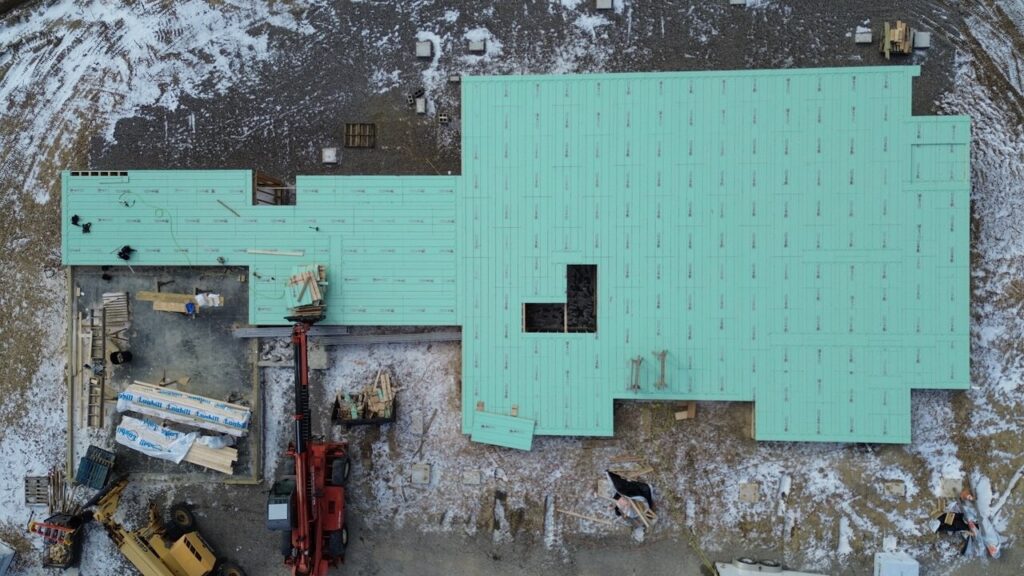
• Warmboard is the most conductive radiant panel assembly. It has a thick top surface (0.025”) made of high conductivity aluminum alloy (1100-0). The modular pattern of channels are fully lined by this continuous aluminum plate to maximize the contact area with the hydronic tubing. The aluminum plate covers the entire floor and is everywhere in direct contact with the finish floor materials. This makes for a highly conductive assembly.
The basic equation for heat flow is: heat flow (F) equals delta T (∆T) times Coefficient of Conductivity (K) times cross sectional area (A) divided by the length (L) over which heat must flow.
It is a principle of thermodynamics, established by this formula that as conductivity goes up, water temperature can go down. It is always less expensive to heat water to a low temperature than a high one. It is well accepted in the boiler industry that for every three degrees that you lower the water temperature, you save 1% of the cost to heat that water. This means that compared to the least conductive radiant floor systems (staple up) our water temperatures are as much as 60 degrees lower for the same heat output. Compared to the commonly used thin slab systems, Warmboard uses as much as 30 degree lower water temperatures. This means an additional 10-20% savings over these more antiquated radiant panel assemblies.
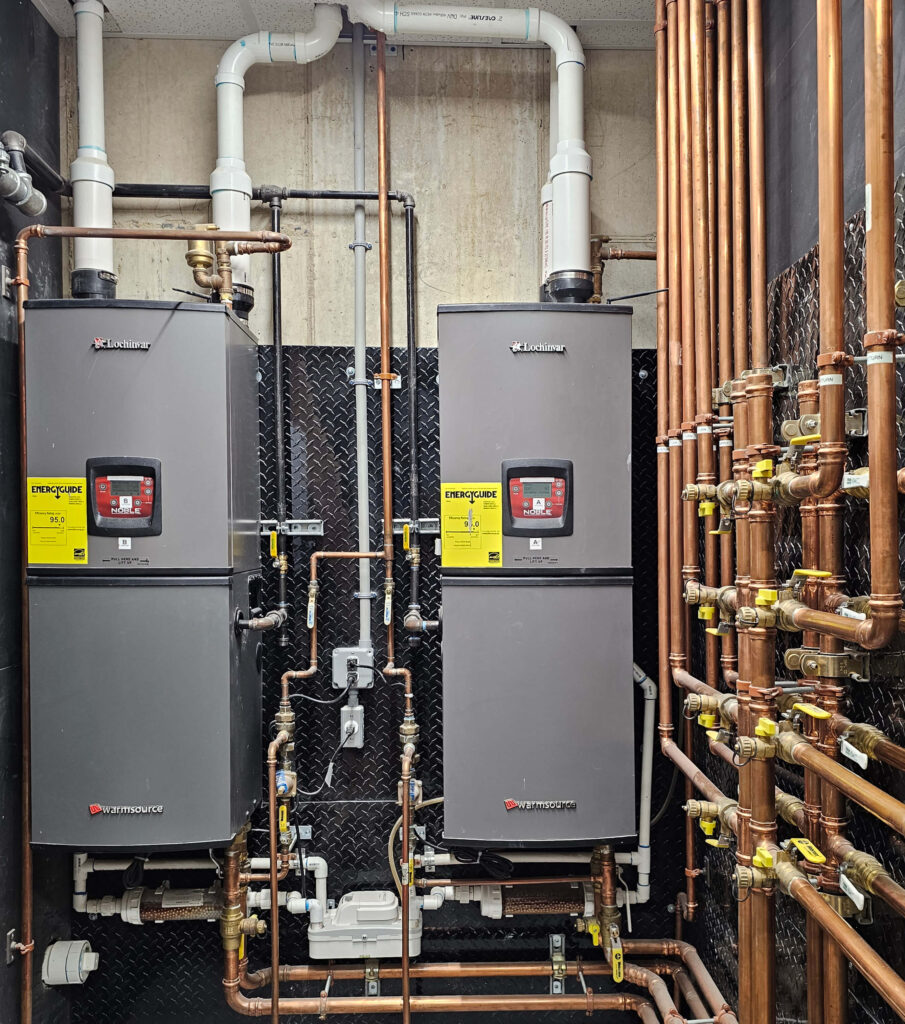
• Warmboard maximizes the efficiency of condensing boilers. Most modern ultra high efficiency boilers are termed condensing boilers because when they are operated below 140˚ F , the water vapor in the flue gases condense into water droplets on the heat exchanger thereby extracting the maximum amount of energy from every gallon of fuel oil or cubic foot natural gas. Because Warmboard systems typically operate well below 140˚ they can increase the efficiency of these boilers by up to 8% when compared to radiant systems that require higher water temperatures.
• Warmboard’s low mass allows the efficiency of temporary temperature set back. Many state energy codes require that programmable (set back) thermostats be installed to allow energy savings at night when occupants are sleeping. High mass systems never make use of this feature because it takes so many hours for them to change their output. Fast responding Warmboard radiant heat works quite well with night time set back, saving additional energy in the process. Vacation setback is another important means for saving energy. If you’re going to be away from your primary home on vacation during the winter, it makes sense to set your thermostat back to perhaps 50 degrees which will save considerable energy while you are gone. Or if you have a vacation home perhaps on the ski slopes you would similarly want to set the home back when not occupied, but with a high mass system it may not be worth your while to save that energy if you’re going to wait a day or so for your home to get warm. But with Warmboard radiant heat, you can be comfortable in an hour or two after returning home which will encourage many homeowners to save all the energy possible with vacation set back.
• Warmboard’s low mass prevents overshoot. High mass systems have been known for producing less than the desired amount of heat all morning and more than the desired heat in the afternoon. The afternoon overshoot problem is often resolved in a high mass system by simply opening windows to dump the excess heat. While it is difficult to exactly quantify the savings that come from Warmboard being able to accurately and quickly adjust its heat output to match changing loads, it makes simple sense to have a heating system that does not require opening windows in the winter to provide the desired temperature.
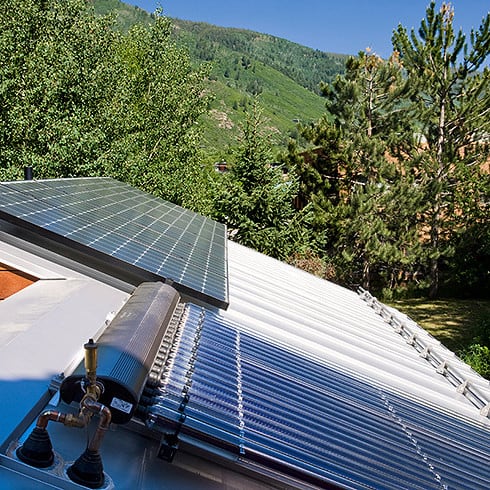
• Warmboard’s low water temperature requirements are ideal for alternative heat sources. There are a number of innovative means of heating water, such as ground source heat pumps, solar, fuel cell cogeneration, etc., that are highly efficient but only work best with moderate (under 120 degree) water temperature requirements. While most radiant heat systems require warmer water than these technologies can supply, Warmboard’s high conductivity make it a perfect match for these technologies. This helps explain why five universities at the recent Solar Decathlon, including MIT and the University of Maryland, the top US entry, chose Warmboard as an integral part of their ultra efficient entries.
• Save thousands on fuel costs each year Modern homes are well insulated, have excellent glazing, low energy usage lighting and many energy efficient solutions that make them seem more like the 40 mpg gallon economy cars we see on the road today than the gas guzzlers of the past. But if you add a radiant heat system to that otherwise efficient home and combine it with a fast response, low mass, highly conductive Warmboard radiant subfloor, in effect, you can start approaching the ownership of a home that behaves, by comparison, more like a car that gets 100MPG. We say this not only because of the theoretical savings detailed above, but because we have many homeowners living with the comfort of Warmboard heat in their homes who report heating bills as much as 60% lower than similar sized homes in the same community. If you might normally expect to pay $5,000 to heat your home through the cold months, bills in the $2,000 range are what many Warmboard homeowners are experiencing. But remember, your mileage may vary.
Friday, July 11, 2008
For High Performance Radiant Heat…Conductivity, Not Mass, is King
Often, when people are talking about radiant floor heating, the term “Thermal Mass” comes up. Thermal mass in this context is a term that refers to the ability of a high mass radiant floor assembly to store heat. The concept originally made sense in the design of passive solar homes back in the 60’s and 70’s. A dark colored high mass slab made of Portland cement concrete or gypsum concrete was often positioned under south facing windows. The heat from the sun would soak into the slab all day. Once the sun went down, the slab would give up its heat to the habitable space, in essence delaying the release of the sun’s heat by about 12 hours. The delay of the release of heat was a benefit in these systems precisely because the sun gave off its greatest amount of heat about 12 hours before it was needed.
Because passive solar could rarely supply all of the heat needed for a home, these slabs were often poured with tubing embedded in them so that hot water could heat the slab when there was insufficient heat from the sun stored in them. In other words, they were combination radiant floor heating systems and passive solar systems. Because these systems were prevalent during the infancy of radiant and solar, the terms thermal mass and radiant heat became linked in people’s minds.
But the same thermal mass that is so essential to a passive solar home causes one of the more common complaints with radiant heat … that it’s slow. In high mass systems, because heat loads change upward or downward more rapidly than a high mass slab can respond, it is not uncommon for the inhabitants of a high mass radiant heated home to be too cold in the morning and too hot in the afternoon. Or if they are returning to a cold home after an absence, they might have to wait a day or more for their home to come back up to a comfortable temperature.
As interesting as the history of the association of passive solar with radiant heat may be, given a blank sheet of paper, no one would design a radiant system to be a storage device. It’s the job of a radiant system to deliver heat not store it. Homes lose heat because heat flows from the warm interior to the cold outside. It’s the job of a radiant floor system to cause heat to flow into the conditioned space at close to the rate that heat is flowing out. The property of a material that allows heat to flow through it is called conductivity. Yet concrete is an inherently mediocre conductor. Aluminum is 240 times as conductive as concrete! So concrete, by its very nature, is a mediocre choice for a radiant panel material.
Because the quantity of heat that must be supplied by a radiant panel is constantly changing for any number of reasons, the ideal radiant system is able to adjust its heat output upward or downward, in real time, as is needed to create a constant temperature environment. Paradoxically, the quality most often touted as the advantage of radiant systems based on high mass slabs, namely, that they don’t vary much in their output, is precisely their Achilles heel. The slab itself may maintain a constant temperature, but the conditioned space they serve doesn’t maintain a constant temperature simply because heat loss varies throughout the day.
Boiled down to its essence, a high mass system is really a control system, not unlike a flywheel. But it is not a very bright control system. It is about as intelligent as a lump of concrete. This means that sometimes it will accidentally get it right and sometimes it will, by equally random accident, get it wrong. Like a stopped clock, it’s guaranteed to be right at least twice a day.
The point is, if we are not getting our heat from an uncontrolled source such as the sun, but instead, get it from a controllable fuel source or, for example, from some of the emerging ultra high efficiency technologies such as ground source heat pumps, it makes a lot more sense to control the heat supplied, by use of an intelligent control system … a thermostat. Such a smart control system can merely turn on a pump in response to a call from thermostat, which can direct that heat to a highly conductive low mass radiant panel, which can deliver that heat in real time as is needed.
This is especially true for modern, active solar systems. These systems do not store heat in an uncontrolled slab but instead store the Sun’s heat in a mass of water held in a well insulated tank. A pound of water will store 3 times as much heat as a pound of concrete. This means that not only are concrete slabs mediocre conductors, they are a mediocre means of storing heat as well. In a well engineered active solar system, heated water can be pumped as needed to a highly conductive low mass panel, controlled in real time by a simple thermostat.
High mass systems are being relegated to the dustbins of history. Low mass, fast response systems are the future of radiant simply because they are better engineered relative to the laws of thermodynamics. Because the best low mass systems employ a thick aluminum plate to conduct heat, they are inherently more conductive than concrete. Highly conductive radiant panel assemblies allow the use of lower water temperatures than high mass slabs, which saves energy (i.e. money). Fast responding low mass systems also save energy by avoiding the waste of under-shooting or over-shooting the desired interior temperature, and by allowing night setback and vacation setback. But most importantly, low mass systems are better able to maintain the desired interior temperature on a constant basis. Constant temperature at the desired set point, the essence of heating comfort after all, is the primary mission of a modern, energy efficient, well controlled, radiant floor heating system.