FAQ’s

How much does Warmboard cost?

There is no one-size-fits-all answer to this question. We find that the complete installed cost of an entire radiant system is the most meaningful way of determining if a radiant system in general, and specifically Warmboard radiant, fits the construction budget for your home.

Radiant systems are a premium way to heat a home, and regardless of panel material, can be expected to cost roughly three times as much as a forced hot air system. With Warmboard, lower operating cost can mitigate much of this higher initial cost and in fact, Warmboard’s energy savings of 25% to 40% can help make Warmboard the wise financial choice in the long run.

The Warmboard panel portion of a radiant system varies in cost based on quantity. To precisely determine the needs of your project our design team will create a detailed panel and tubing layout. Prior to this design work, your Warmboard project manager can help you with rough budgets based on a review of your plans, our experience with labor rates in your area and the likely cost of the components needed to heat and circulate water. With completed designs, we can quote exact panel costs plus freight and sales tax where applicable.

Why is radiant more comfortable?

Similar to the way a sunny day can keep you warm when the air temperature is cool, Warmboard keeps you warm in your home using radiant heat and not hot air. There is no dried-out blowing air, dust or drafts. Your house feels just right, and an added bonus is the heating system is unseen and unheard. Warmboard has additional advantages of faster response time, no “undershoot” or “overshoot” (the thermostat chasing a required temperature), and more consistent floor temperatures across the surface of your room.

How do you fasten (install) Warmboard to the floor joists?

Warmboard is glued, screwed or nailed to the floor joists in the same manner as any standard subfloor. It is also cut with standard circular saw with a carbide saw blade. We recommend screws and glue but nails and glue work fine and are the most common method.

How do Warmboard panels hold up during construction?

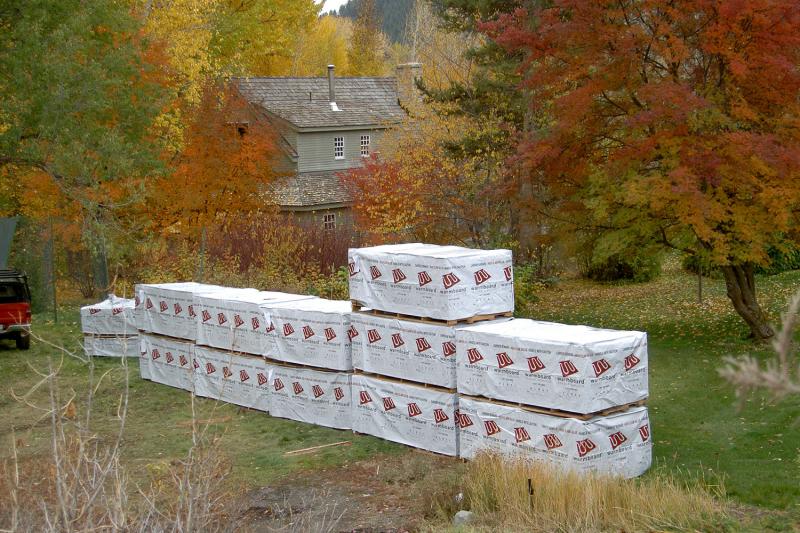
Warmboard panels are rated Exposure 1, as specified by the APA – The Engineered Wood Association. The APA trademark is the consumer’s assurance that products, which bear its stamp, have met specific manufacturing and product performance standards.

As an APA approved product, Warmboard panels can handle exposure to rain, snow, and ice. In fact, the aluminum top surface of Warmboard acts as a ‘built in’ weather barrier making it even more impervious to rain and snow than standard Exposure 1 plywood. During construction Warmboard panels can be walked on, bracing can be nailed off and sill plates can be nailed directly to them. In general, Warmboard Radiant Subfloor should be treated in the same manner as any other plywood subfloor.

It should be noted that it is normal for plywood to experience minor amounts of bowing, due to humidity swings (especially during shipment). However, the panels will lay flat when they are fastened down over the joists and secured with construction adhesive and common nails, ring-shank nails, or screws per the installation instructions. APA standards also require 1/8 inch gapping on the 4-foot side of all subfloor panels, including Warmboard panels, to compensate for changes in moisture of the engineered plywood. The 8-foot side of Warmboard panels are pre-gapped tongue and groove.

Does the PEX tubing ever get damaged during construction?

The short answer is: yes, like all other radiant systems, tubing damage is possible, but with proper job site management damage can avoided entirely. Experienced Warmboard installers rarely incur tubing damage.

Preventing tubing damage

As Warmboard panels are installed (in place of a standard plywood subfloor) they automatically create, 12” o.c. loop patterns that are optimized for each individual home. These patterns streamline the installation of PEX tubing which is typically installed just after panel installation and before framing of interior walls.* PEX tubing is remarkably tough once installed in Warmboard’s modular channels and it tolerates the normal wear and tear of a construction site quite well. Of course you cannot nail into the tubing or use sharp tools directly on top of a tube. It is one of the advantages of the Warmboard system, that the tubing is VISIBLE during all subsequent construction. In fact, tubing is visible right up to the point of floor covering installation. For this reason damage to tubing is easily avoidable simple by using common sense and just a little extra care. As an added precaution, some professionals have chosen to use temporary masonite panels or thin plywood to cover high traffic areas during construction.

Tubing repair

In the unlikely event that tubing damage does occur it is very easy to fix. Every tubing manufacturer makes repair couplers to repair a punctured section of tubing. Simply pop out the tube, cut out the damaged area and insert a coupling. Because the couplings are larger in diameter than the PEX tube, the installer will have to chisel the groove slightly to accommodate the coupler. Average time to fix a punctured tube is typically 10 – 15 minutes.

During construction the system should also be monitored using an air pressure test at 60psi which can also detect leaks.

How much extra labor does Warmboard take when compared to standard subfloor?

Through our own research and through feedback from building professionals, we have found that Warmboard requires 5% to 50% more labor than installing a traditional subfloor for a first time user.

Warmboard takes a bit more labor to install because contractors must follow the panel layout and properly align the panels using the alignment pins we provide. Also, in general, the more zones specified the more cutting and trimming of panels is necessary.

Warmboard panels are easily cut using a carbide blade and skill saw, which is standard subflooring technique.

Overall, when compared with other radiant systems, Warmboard installations result in tremendous labor savings throughout construction. Again, the key factor is that Warmboard is the subfloor!

What type of insulation should I use underneath my Warmboard subfloor?

All radiant systems require insulation under the subfloor and Warmboard is no exception. We recommend standard fiberglass batts insulation of minimum value R-19. One important distinction is that foil backed insulation is NOT required when using Warmboard.

How long of a delay is there between installing Warmboard and continuing the building?

Warmboard is installed about as fast as regular subfloor. The tubing should be placed in the channels as soon as the entire subfloor is nailed down. Tubing takes generally a day to put in place. Walls can be built on top of Warmboard as soon as the tubing is down. Typically the tubing is installed the next day after subfloor installation and the framing contractors never leave the job site.

What does my Warmboard purchase include?

Your Warmboard purchase includes:

A. Warmboard panels in the correct configuration of straight, left turn, right turn and double panels (remember, Warmboard is your structural subfloor!).

B. A set of plans done by our in-house design department including panel layout, tubing layout with manifold location.

C. Installation kit including written instructions, alignment pins, router bit and custom routing templates.

D. Unlimited telephone support from our technical services department

Additional components needed for completing your radiant heat system:

A. PEX tubing – We recommend PEX Aluminum PEX (ask us for more info!)

B. Manifold(s)

C. Heat source (water heater or boiler)

D. Circulators/controls/thermostats

Most commonly these components are sourced locally. Our regional managers can usually recommend local resources or we can recommend nationwide companies to assist you with this part of your system.

What kind of floor coverings can I use with Warmboard?

Virtually any floor covering that is ordinarily installed in a wood framed home can be installed on Warmboard. Carpet is installed with conventional nail down tack strips. Slab foam rubber pad is the best pad to use with Warmboard. Vinyl, in conventional construction (as with Warmboard) is always installed over 3/8″ under-layment, attached to the subfloor. Hardwood is nailed directly to Warmboard, typically at right angles to the tubes. The best installations use vertical grain, relatively narrow planks, that have been properly acclimated for moisture. Tile is installed using conventional mortar bed or backer board techniques. For more information please see floor coverings.

How do I air condition a radiant home?

Air conditioning is typically done through a separately ducted system with ceiling registers. This system will provide a higher quality of air conditioning than a system that pushes cold air up through floor ducts. The ducts alone for a typical home are inexpensive to install. Once ducts are installed, the rest of the system cost will be consistent with the costs of a normal central air conditioning that is added to a forced air system.

Do I need special equipment or components in addition to the normal radiant requirements to work with the Warmboard system?

No, Warmboard works with the same components and equipment as any other radiant system. The choice of heat sources, manifolds, etc, is up to the radiant distributor and the installer. While many radiant systems require boilers, sources such as conventional hot water heaters, ground source heat pumps and solar can work well with Warmboard. Because of Warmboard’s fast response, our systems also frequently have less complicated control systems.

Is Warmboard more efficient than forced air heating?

Radiant heated homes are 25%* more efficient than forced air heated homes and Warmboard is the most efficient radiant heating system available.

Radiant heat is more efficient because:

  • Direct radiant pick-up by the skin, like the warm sun on cool day, makes you comfortable at a lower thermostat setting.
  • Radiant does not stratify like forced air so there is significantly lower ceiling temperatures meaning less heat loss through the roof (it’s warmer low where the people are, cooler at the ceiling).
  • Forced air systems blow air which has a cooling effect on your skin requiring a warmer thermostat setting. Forced air systems create drafts.
  • Most forced air systems have many supply registers but only one or two return air registers. Closing the door to a room cuts off the return path, and can cause the room to pressurize and pump heat outside around windows and doors.
  • Forced air ducts have large surface areas making insulation less effective. Seams are frequent sources of leaks as duct tape dries out over time and ducts fall. Dropped ductwork heats the crawl space, not your home.
  • Radiant is easily zoned allowing you to heat room by room, and only as required

* Study done at Kansas State University in conjunction with the American Society of Heating Refrigeration and Air-Conditioning Engineers (ASHRAE).

Can Warmboard be used in a remodel situation?

About 20% of our panels are routinely used in retrofit/remodel projects. Warmboard will add stiffness to any existing subfloor; will typically provide a flatter and smoother subfloor surface, will ease installation of all finish floor goods, especially hardwoods and its low mass combined with high conductivity will provide for the best thermodynamic performance available.

Site Map | Privacy Policy
For more information call 1-877-338-5493
Warmboard ® Radiant Heat Subfloor © 2010 Warmboard Inc. All rights reserved.
US Patent No. 5,788,152